Reviews

How to Choose a Baby Stroller 2026: The Six Decisions

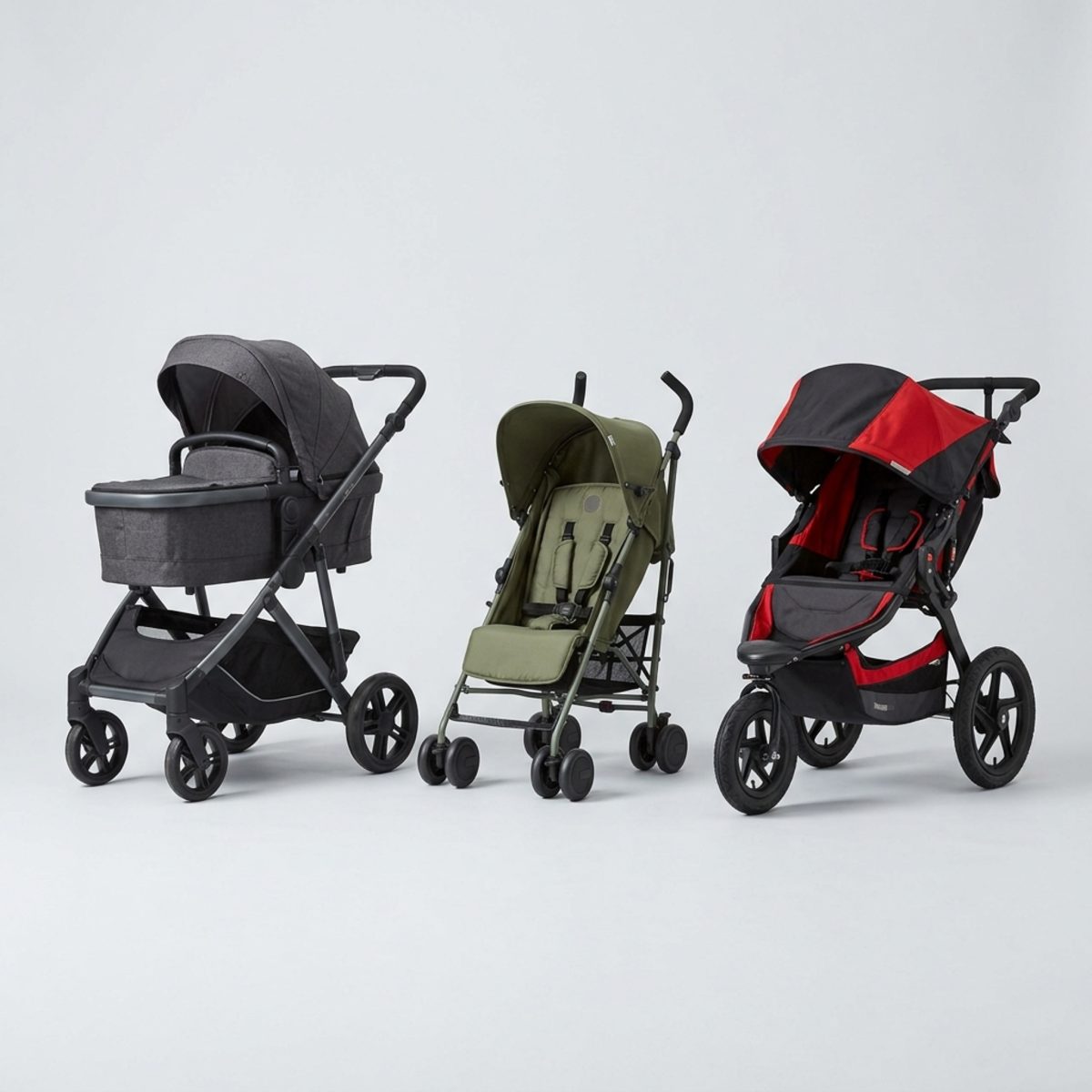
Three different baby strollers side by side on a plain background: a pram with a carrycot, a lightweight folding stroller and a large-wheeled jogger

At a glance

The six decisions at a glance

ModelPrice tierBest for
Baby Jogger City Tour 21 · Weight and fold — 14.3 lb, folds to 23 × 19.4 × 7.4 in $$$Premium If you fold it several times a day, or fly
Baby Trend Expedition Zero Flat2 · Terrain — 3 wheels, all-terrain tires $$Mid-range If you walk on gravel, grass or paths
Mompush Wiz 2-in-13 · Lie-flat — pramette mode, birth to 36 months $$Mid-range If a newborn will sleep in it
Chicco KeyFit Caddy4 · Car-seat fit — frame for Chicco infant seats $Budget If you will click an infant seat on
Jeep Destination Ultralight Double5 · One child or two — two seats, 80 lb total $$$Premium If you are carrying two children
Dream On Me Coast Rider6 · Cost — 45 lb limit, about 13 lb itself $Budget If you want to spend as little as possible

The framework

The six decisions, in the order they matter

The order matters, because these decisions are not equally reversible. Buying a heavier stroller than you wanted is a daily annoyance you cannot undo. A colour you regret is invisible. Work down the list and stop when a stroller has answered every line.

1. Weight and folded size — decide this first. It is the specification you will live with most often and regret most reliably. You lift a stroller in and out of a car repeatedly, fold it one-handed while holding a child, and carry it up steps. The strollers on this page run from 11.6 lb to about 30 lb — the heaviest is two and a half times the lightest. Folded size matters as much as weight: a stroller that folds long will not fit a small boot even when it is light, and the smallest fold here is roughly 23 by 19 by 7 in, about the footprint of a large backpack. If you will fold it several times a day, this is the only line that matters.

2. Terrain — pavement, or something else? Wheel count and tire type are the honest signals. Four small wheels are built for smooth floors, shops and pavement. Three large wheels with bicycle-style tires are built for gravel, grass, park paths and running. One stroller here has three wheels, all-terrain tires, and a maker's statement that the tires will not go flat. If nearly all of your walking is on pavement, you are paying for capability you will not use.

3. Does the seat have to lie flat? This is what decides whether a stroller works for a newborn at all. A seat that reclines to near-flat can hold an infant; one that does not, cannot. One stroller here converts — the seat becomes a pramette and reverses to face you or the world. Another reclines to near-flat, which covers the same stage in a lighter package. If your baby will sleep in the stroller, the recline is not a comfort feature, it is the requirement that decides the purchase. Buying well after the newborn stage, you can skip it.

4. Will an infant car seat click onto it? This is a separate question from whether the stroller is any good — it is about whether the two products are compatible at all. Some strollers are built as frames specifically to carry an infant seat. Others accept one only through a brand-specific adapter, sold separately. Some accept none. Compatibility is set by the manufacturer, not by the shape of the seat, so check the specific pairing rather than assuming a standard connection. For the first months, clicking a sleeping baby out of the car onto a frame is the largest convenience in stroller ownership — and a frame usually costs less than a full stroller.

5. One child, or two? Seating capacity is the least reversible decision of the six, because a single cannot later become a double. If a second child is likely within a few years, that changes which stroller you should buy now. The two-seat option here is rated to 80 lb across both seats, so read it as roughly 40 lb per child — not 80 for one. Where a maker quotes a double's limit as a single figure, that is almost always the pair.

6. Cost — and what the money actually buys. The strollers on this page span roughly a threefold range, and the difference is capability rather than quality. The least expensive is a genuine, certified stroller with a 45 lb child limit. The most expensive folds smaller, carries two, or converts. The trap is buying premium capability you will not use: all-terrain tires for a city, or a two-seat frame for one child. Settle decisions one to five, then spend on the stroller that answered them.

What does not decide it. Colour, brand, and how many accessories come in the box. None of the six decisions above is about those, and all of them are recoverable if you get them wrong.

The picks

The strollers, in detail

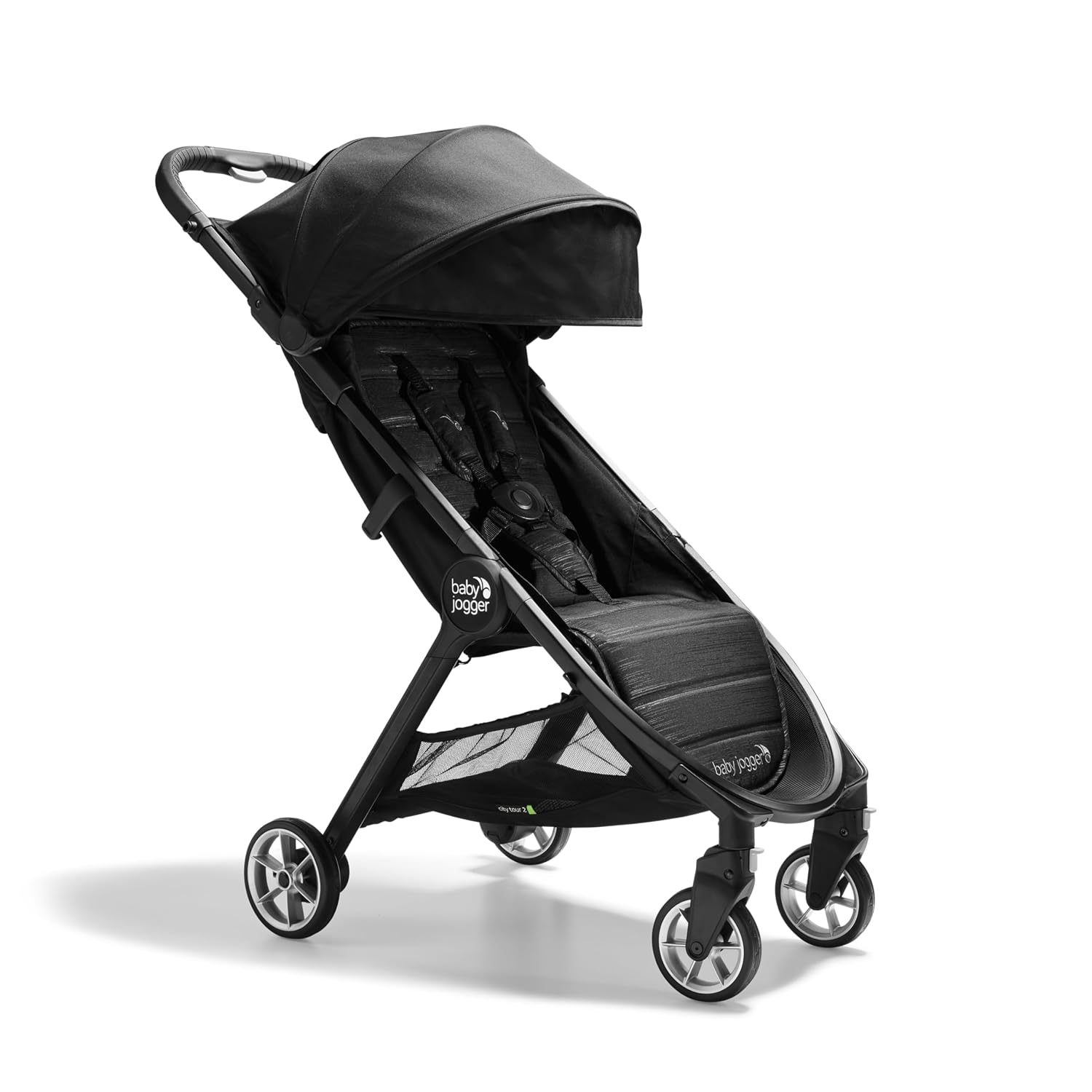
Baby Jogger City Tour 2 — The stroller for decision 1 — the one you fold and carry constantly.
Lightest, smallest fold

Baby Jogger City Tour 2

The stroller for decision 1 — the one you fold and carry constantly.

Check price on Amazon Price tier: $$$ · Premium

Why it is here: it answers decision 1 better than anything else on the page. At 14.3 lb it is the lightest full stroller here, and it folds in one step to about 23 × 19.4 × 7.4 in — roughly the footprint of a large backpack, and compact enough to be sold as carry-on approved. The seat reclines to a near-flat position, so it covers the newborn stage without a separate bassinet, and it has adjustable calf support, which is unusual at this size.

Pros

  • 14.3 lb — the lightest full stroller here
  • One-step fold to roughly 23 × 19.4 × 7.4 in
  • Seat reclines to near-flat — covers the newborn stage
  • Adjustable calf support, unusual in this size class

Cons

  • Small wheels — pavement and smooth floors only
  • 45 lb child weight limit
  • A car seat needs a separate adapter, sold on its own
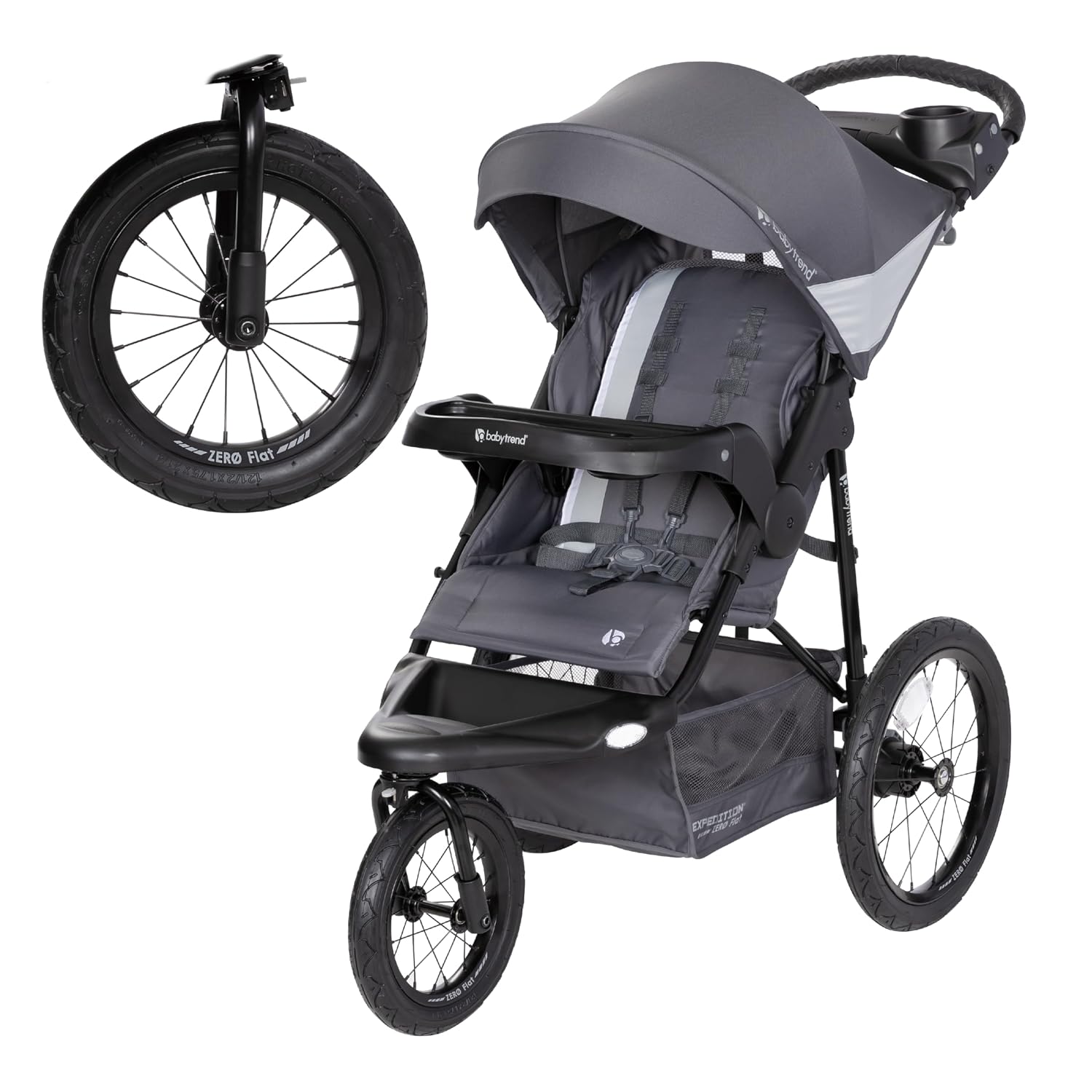
Baby Trend Expedition Zero Flat Jogger — The stroller for decision 2 — gravel, grass, park paths and running.
For rough ground

Baby Trend Expedition Zero Flat Jogger

The stroller for decision 2 — gravel, grass, park paths and running.

Check price on Amazon Price tier: $$ · Mid-range

Why it is here: it answers decision 2. Three wheels with high-impact all-terrain bicycle-style tires, and the maker states the tires are built so they will not go flat — which matters on a stroller you push over broken ground. The seat has multiple recline positions and a 5-point harness, the parent tray carries LED lights for walks after dark, and it is rated to a 50 lb child. The trade-off is the weight: at roughly 30 lb this is the heaviest stroller on the page, and that is the honest cost of the larger wheels and the frame that carries them.

Pros

  • Three wheels with all-terrain bicycle-style tires
  • Maker states the tires will not go flat
  • LED lights built into the parent tray
  • Multiple-position reclining seat, 50 lb limit

Cons

  • About 30 lb — the heaviest stroller here
  • Fewer owner reviews than the other picks here
  • Three wheels steer differently in shops and doorways
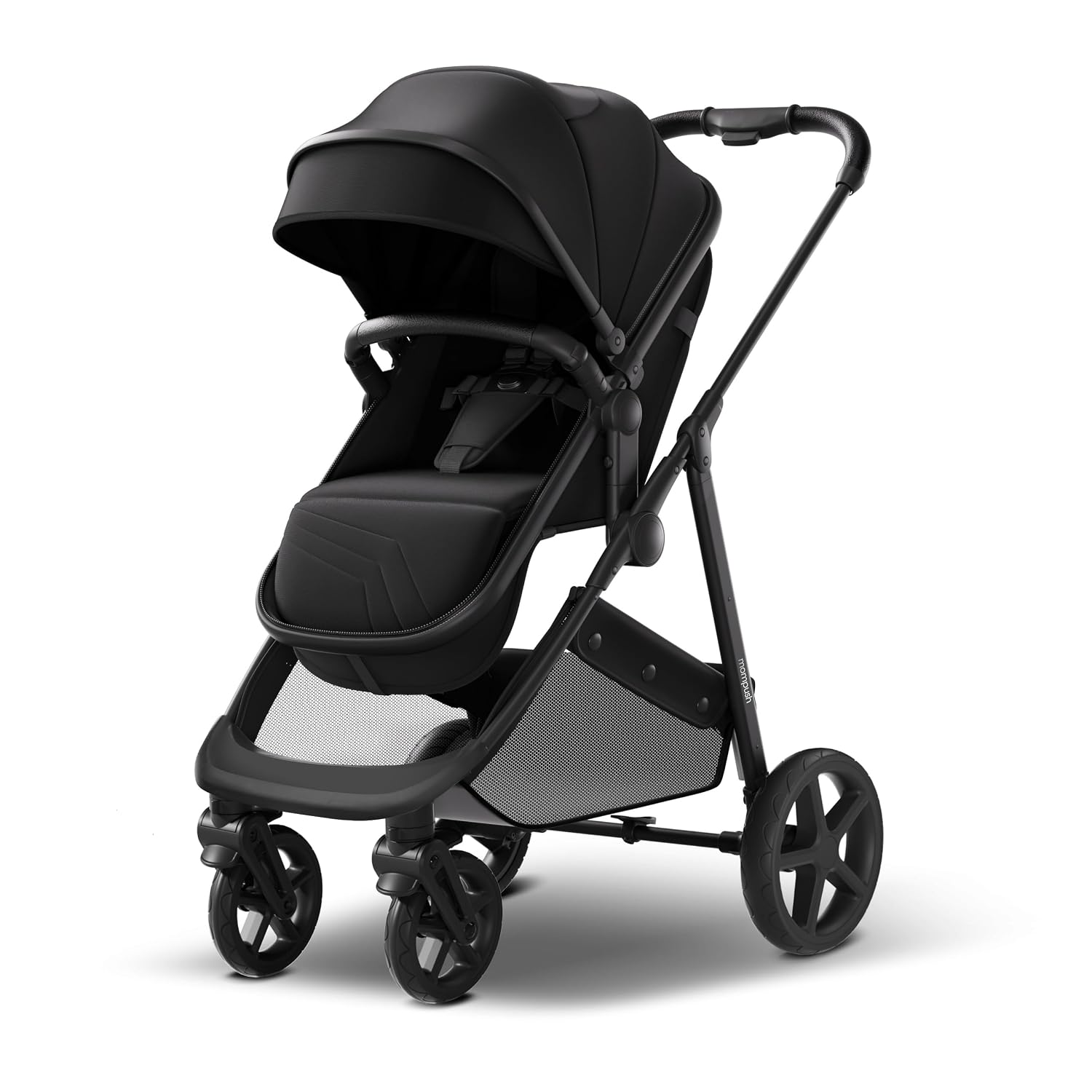
Mompush Wiz 2-in-1 — The stroller for decision 3 — a seat that lies flat and faces you.
Converts for a newborn

Mompush Wiz 2-in-1

The stroller for decision 3 — a seat that lies flat and faces you.

Check price on Amazon Price tier: $$ · Mid-range

Why it is here: it answers decision 3, and takes a run at decision 5 as well. The seat converts to a pramette mode so a newborn can lie flat, and it reverses to face you or face the world as your child's mood changes. There is a zip-out UPF 50+ canopy, a one-hand fold, and the maker rates it from birth to 36 months at a 50 lb limit. It is currently ranked first in its Amazon stroller category.

Pros

  • Seat converts to pramette — lies flat for a newborn
  • Reversible seat — faces you or faces out
  • Zip-out UPF 50+ canopy
  • One-hand fold, rated birth to 36 months

Cons

  • 23.1 lb — the second heaviest here
  • Folds large, at roughly 43 × 24 × 14 in
  • That fold is a tight fit in a small car boot
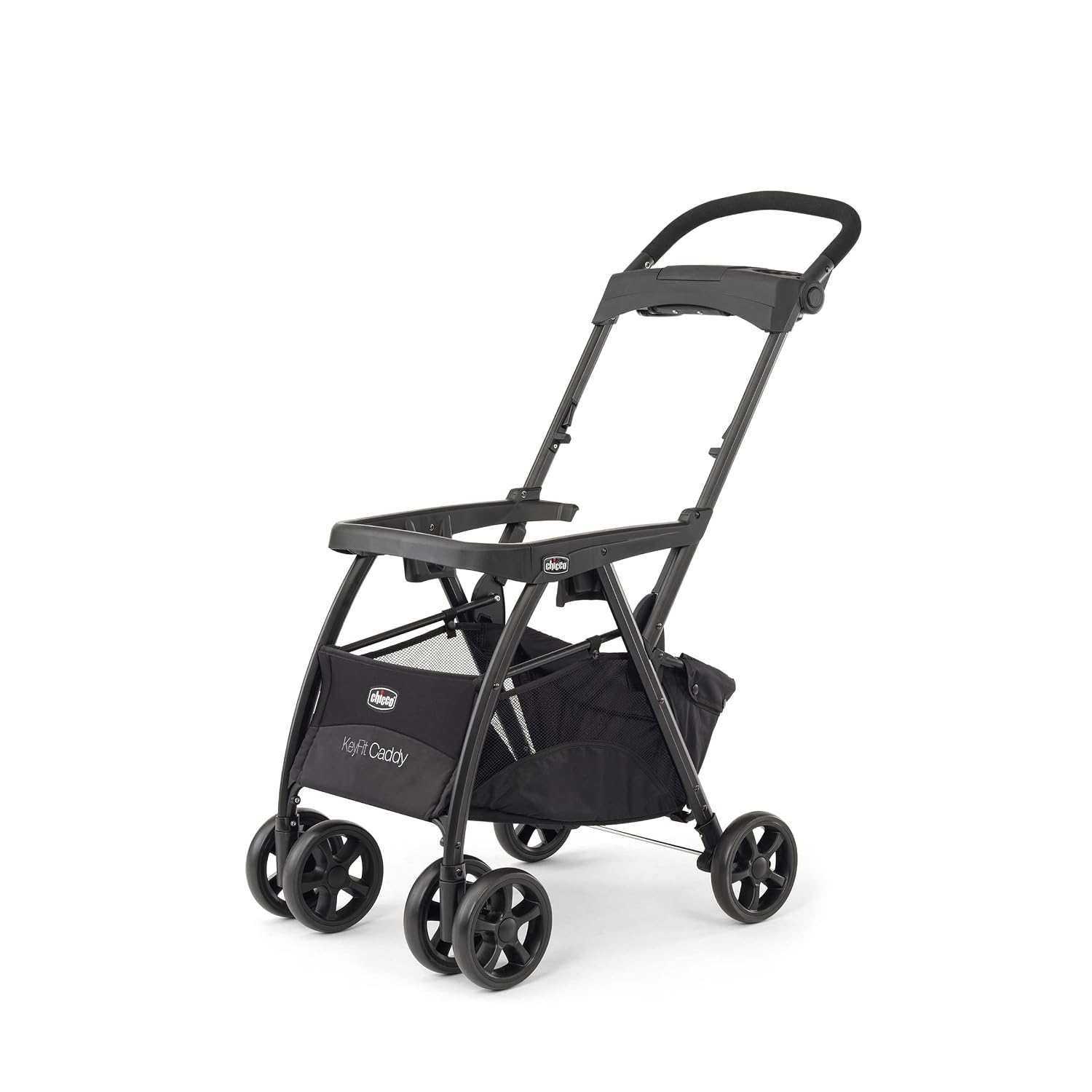
Chicco KeyFit Caddy — The stroller for decision 4 — carrying an infant car seat.
Car-seat frame

Chicco KeyFit Caddy

The stroller for decision 4 — carrying an infant car seat.

Check price on Amazon Price tier: $ · Budget

Why it is here: it answers decision 4 directly. It is a frame built for one job — it accepts all Chicco infant car seats with a click-in attachment, so you lift a sleeping baby out of the car and onto it without unbuckling anything. At 11.6 lb it is the lightest thing on this page, it folds one-handed and stands on its own, and at four push-handle positions with all-wheel suspension it is more adjustable than its price suggests. Note what it is not: there is no stroller seat of its own, so its useful life ends when your child moves to a convertible car seat.

Pros

  • 11.6 lb — the lightest here
  • Accepts all Chicco infant car seats, click-in
  • One-hand compact fold that stands on its own
  • All-wheel suspension, four push-handle positions

Cons

  • Carries an infant seat only — no stroller seat of its own
  • Limited to Chicco infant car seats
  • Its useful life ends sooner than a full stroller's
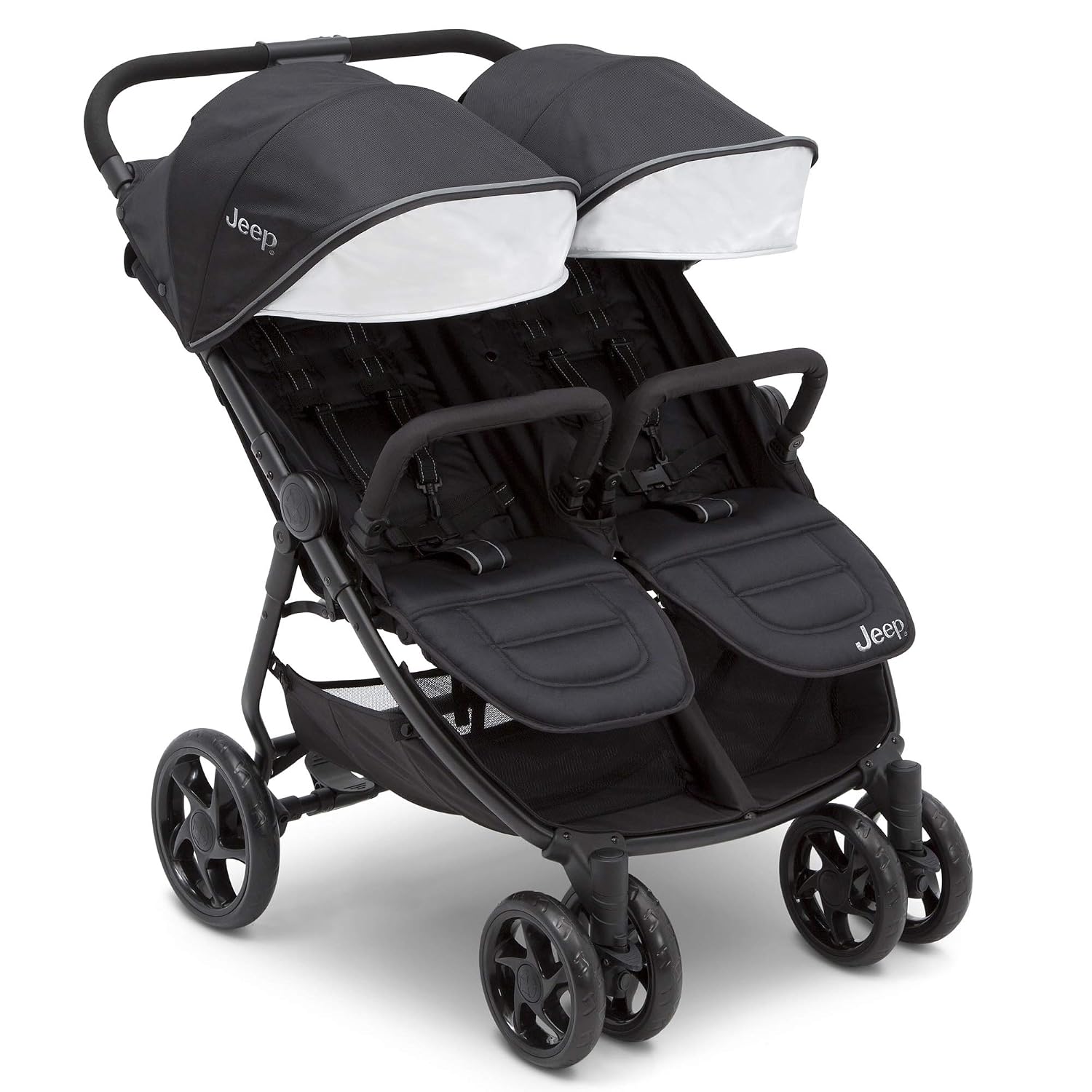
Jeep Destination Ultralight Double — The stroller for decision 5 — two children at once.
Two children

Jeep Destination Ultralight Double

The stroller for decision 5 — two children at once.

Check price on Amazon Price tier: $$$ · Premium

Why it is here: it answers decision 5, the one you cannot change later. Two seats side by side, each rated to 40 lb — 80 lb in total, so read the figure per child rather than as 80 for one. Both canopies have pop-out SPF 50 sun visors, the storage bin is sized for a full day out, and the aluminum frame holds the whole thing to 28.7 lb, which is heavy as a single but light for a double. If a second child is likely within a few years, this is the decision to settle before the others.

Pros

  • Two seats, 40 lb per child
  • Aluminum frame — light for a double
  • SPF 50 pop-out visors on both canopies
  • Large storage bin

Cons

  • 28.7 lb — heavy to lift into a boot
  • The 80 lb figure is across both seats, not one
  • Needs a large boot to store
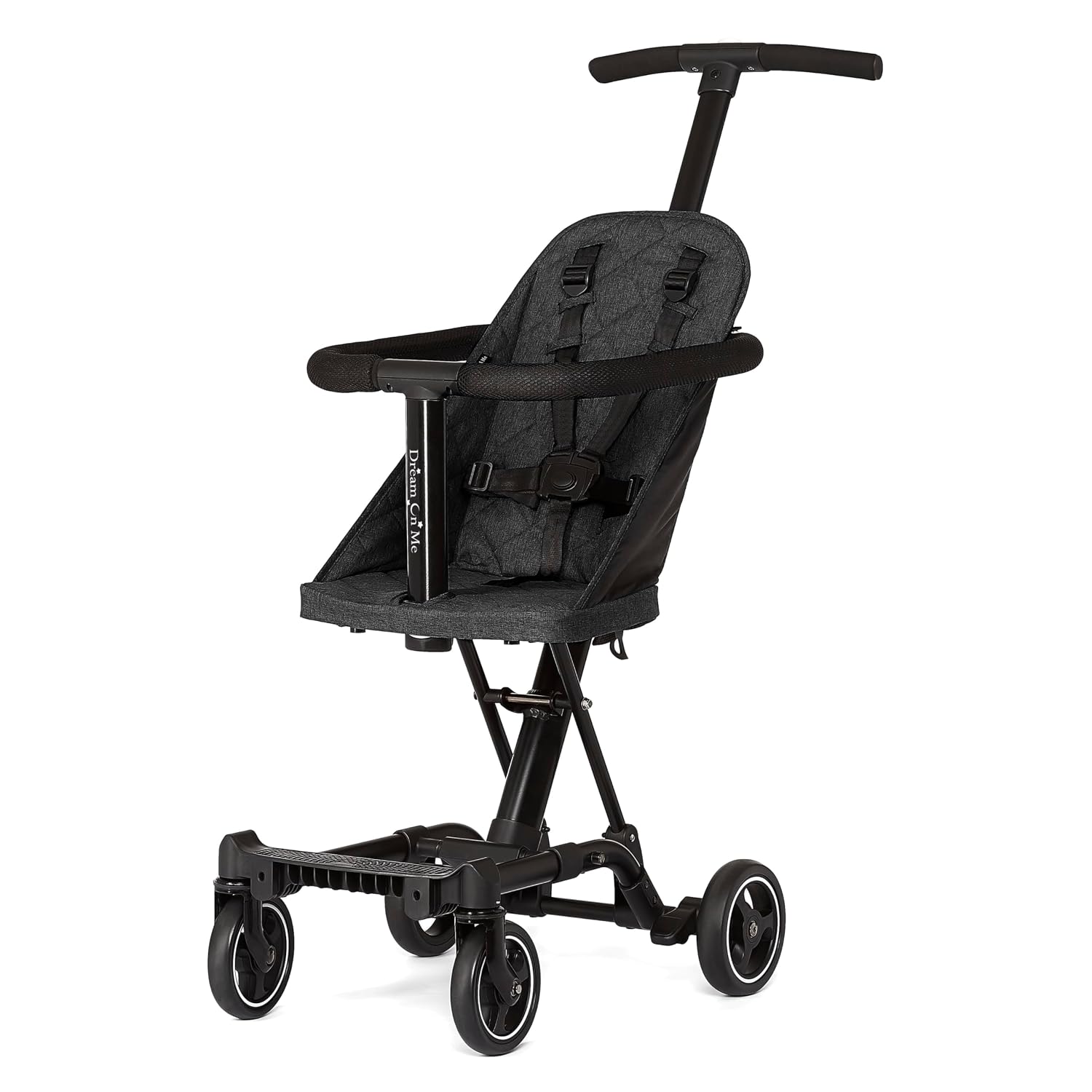
Dream On Me Coast Rider — The stroller for decision 6 — the least money for a real stroller.
Least expensive here

Dream On Me Coast Rider

The stroller for decision 6 — the least money for a real stroller.

Check price on Amazon Price tier: $ · Budget

Why it is here: it answers decision 6, and it is the reason cost comes last rather than first. It is the least expensive stroller on this page and still a real one: certified by the Baby Safety Alliance and ASTM-tested, with a 45 lb limit, a structured upright seat, a 5-point harness and an adjustable handle. It weighs about 13 lb and folds to roughly 24 × 16 × 11 in. If decisions one to five do not push you toward a specific stroller, this is where the money goes furthest.

Pros

  • The least expensive stroller here
  • Certified and ASTM-tested across its modes
  • About 13 lb with a 45 lb child limit
  • Folds compactly for an inexpensive stroller

Cons

  • Small plastic wheels — pavement only
  • Rated from 6 months, so not a newborn stroller
  • Simpler canopy and storage than the mid-range picks

How this list is built

How to check any stroller against this list

Five checks, in order. Every figure on this page comes from the manufacturer's published product data, not from a review or a retailer's summary.

01

Start with the weight, not the brand

Look up the stroller's own weight first. The figures on this page run from 11.6 lb to 28.7 lb, and that spread changes how often you will actually use the stroller more than any other specification. A stroller you avoid lifting is a stroller you stop using.

02

Check the folded size against your boot

Weight and folded size are different problems. The smallest fold here is about 23 by 19 by 7 in; the largest is roughly 43 by 24 by 14 in, nearly three times the volume. Measure your boot before you decide, not after.

03

Match the wheels to where you actually walk

Four small wheels for floors and pavement, three large wheels with bicycle-style tires for gravel, grass and running. If your real walking is on pavement, a jogging stroller buys capability you will carry around unused.

04

Confirm the car-seat pairing in writing

Compatibility is decided by the manufacturer, and some pairings need a separate adapter. Check the specific stroller and the specific car seat together in the maker's own compatibility information rather than assuming a standard fit.

05

Re-checked before the date at the top

Model names, limits and folds change, and strollers are discontinued quietly. Every stroller on this page is re-verified against the manufacturer's current published data before the date shown at the top of the page.

Common questions

Stroller choice questions

What week of pregnancy should I buy a stroller?

There is no single week that suits everyone, and the useful answer is about which decision you are making rather than when. The one that benefits from early research is the car-seat pairing, because the stroller and the infant seat have to work together and the compatibility is set by the manufacturer. Buying a full stroller before you know whether you will use a car-seat frame is how people end up owning two.

If you want the stroller assembled and tested before your baby arrives, most families work backwards from their due date to leave a few weeks of margin. Anything that depends on your own recovery or your baby's size is a question for your provider, not a stroller page.

Can any infant car seat fit any stroller?

No. Compatibility is decided by the manufacturer, not by the size or shape of the seat. Some strollers accept one brand's infant seats directly, some accept several brands through an adapter sold separately, and some accept none at all.

The reliable check is to look up your specific stroller model together with your specific car seat in the stroller maker's own compatibility information, rather than assuming a standard connection exists. It is also why a frame stroller is often the cheaper route for the first months — it is built for exactly one job, carrying an infant seat.

When should we start using a stroller?

That depends on your baby and on the stroller's own recline, and it is a question for your pediatric provider rather than for a stroller page. What this page can tell you is the mechanical part: whether a seat reclines far enough for a newborn, whether it converts to a pramette, or whether the stroller is designed to take an infant car seat instead of a seat of its own.

Those are the three configurations that make a stroller usable in the first months. Which one fits your baby, and when, is worth putting to your provider.

What is the best stroller for a newborn?

There is no single best one, because it depends on which of the six decisions above you weigh most. For a newborn the binding constraint is the seat: it has to recline flat, convert to a pramette, or be replaced entirely by an infant car-seat frame.

If you want the lightest option that still lies flat, that is a compact travel stroller. If your baby will sleep in the stroller, a converting seat is the more comfortable route. If you are moving between car and stroller constantly, the frame is the least expensive and the easiest of the three.

What is the best stroller for infants and toddlers?

The stroller that answers both stages is one whose seat converts or reverses, because a single frame then serves an infant lying flat and a toddler sitting up. Here that is the converting model in the table above.

The alternative is a stroller with a high enough child weight limit and a near-flat recline to cover both stages without converting — lighter, but less comfortable for a newborn. Either way, check the weight limit and the recline against the ages you actually need, rather than against the label on the box.