
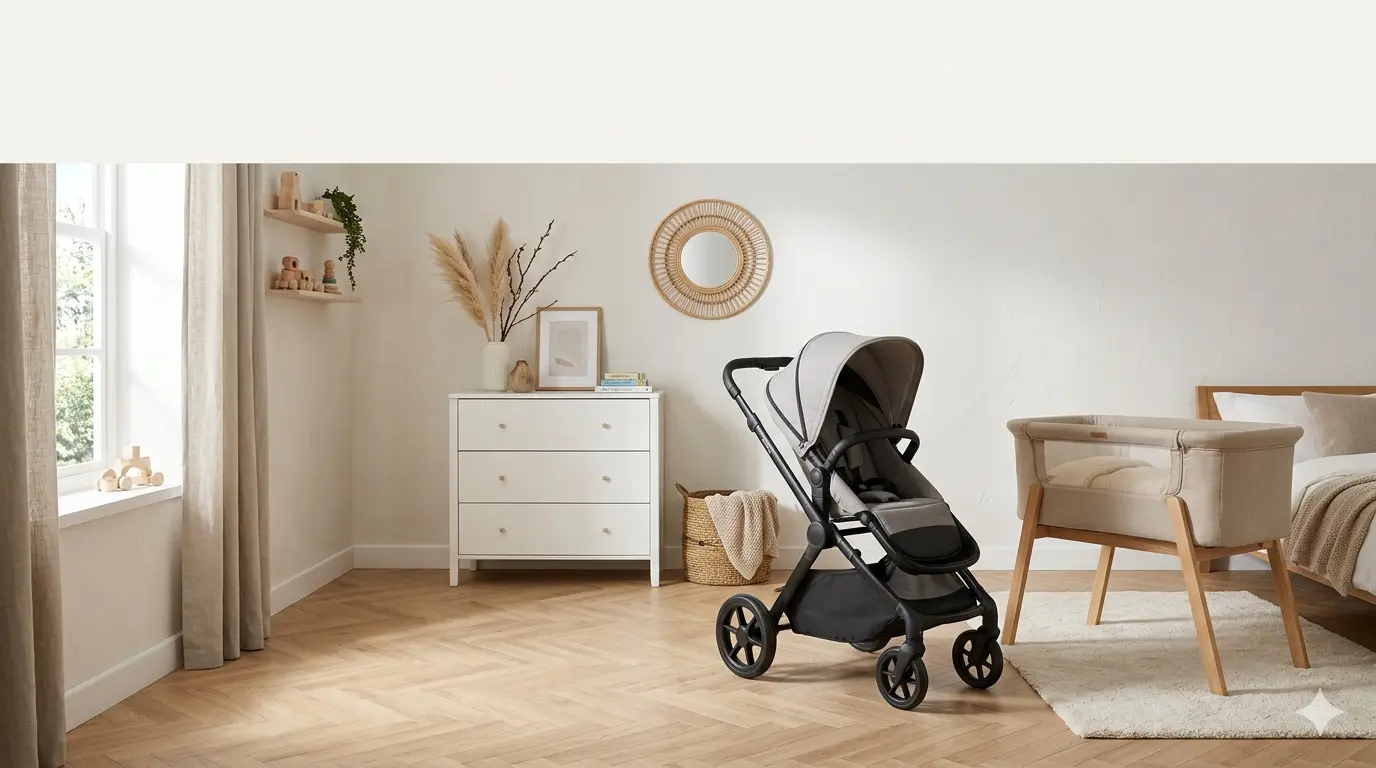
The Ultimate Baby Gear Guide: What You Actually Need (From a Real Mom)
Nobody tells you how overwhelming the baby gear world is until you’re already in it.
One minute you’re browsing a registry checklist, the next you’re deep in a Reddit thread at midnight arguing about whether the $1,200 stroller is actually worth it. Spoiler: sometimes it is, sometimes it really isn’t.
I’ve tested, researched, and yes — made some expensive mistakes — so you don’t have to. This guide covers everything you’ll need in your baby’s first year. Not a watered-down overview. The real stuff, with honest takes on what’s worth your money and what you can skip entirely.
Bookmark this one. You’ll come back to it.
—
Car Seats — Start Here Before Anything Else
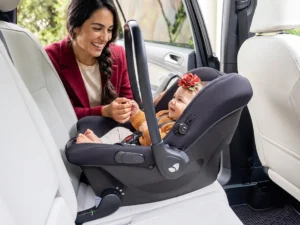
If there’s one place to spend your research time, it’s here. A car seat isn’t a lifestyle purchase — it’s a safety device. And according to the NHTSA, nearly half of all car seats are installed incorrectly. That’s not a small stat to brush past.
The good news is that once you understand the three main types, the decision gets a lot easier.
Infant car seats are rear-facing only and designed for newborns through roughly 12 months. They’re lightweight, come with a carry handle, and click in and out of a base — which is genuinely a lifesaver when your baby falls asleep in the car. The downside is they have a weight and height limit, so you’ll eventually need to transition to something bigger. Our best infant car seats guide covers the top options right now.
Convertible car seats are the long game. They start rear-facing for infants and convert to forward-facing for toddlers, meaning one seat can last several years. If your baby is on the taller side, see our best convertible seats for tall babies — not all convertibles are created equal when it comes to headroom.
Rotating car seats have become genuinely popular in the last few years, and for good reason. Being able to swivel the seat toward the car door to buckle your child — instead of doing the awkward lunge — makes a real daily difference. We cover the best ones in our rotating car seats guide.
For deep dives on specific models, read our Chicco KeyFit 30 review and our Graco Extend2Fit 3-in-1 review — both consistently top-rated and worth understanding before you buy.
One hard rule: never buy a used car seat unless you know its complete history. Seats expire, and a seat that’s been in a crash should never be reused — even if it looks fine.
—
Strollers — Match It to Your Life, Not Instagram
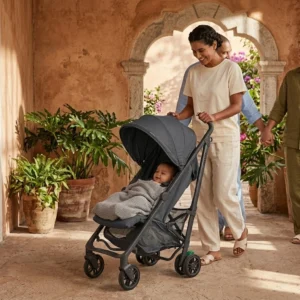
This is where a lot of parents overspend on something that looks beautiful but doesn’t actually fit their life.
A stroller that works brilliantly for a Manhattan mom navigating subway stairs is a completely different stroller than what a suburban mom who mostly loads it into an SUV needs. Before you look at a single model, ask yourself: Where will I actually use this? How often? What’s my car trunk situation?
Full-size strollers are feature-rich and comfortable for both baby and parent but tend to be heavier and bulkier. Great for everyday suburban or neighborhood use.
Lightweight strollers (sometimes called umbrella strollers) fold fast, weigh almost nothing, and fit in overhead compartments. Not great for newborns since most don’t fully recline, but ideal once your baby can sit up independently.
Jogging strollers are built completely differently — air-filled tires, fixed front wheels, and suspension systems that make rough terrain actually smooth. If you run, hike, or spend time on anything other than a perfectly paved path, they’re worth every penny. See our jogging and hiking stroller guide.
Travel systems pair a stroller with a compatible infant car seat. The baby stays in the car seat, which clicks directly onto the stroller frame — no unbuckling, no waking a sleeping baby. A genuinely useful combination in the first year.
When you’re comparing models, pay attention to the one-hand fold, canopy size, and whether the storage basket is actually usable when the seat is reclined. These are the things that matter in real life. See all our current picks on our best strollers page.
—
Bassinets — The First Sleep Space Gets a Lot of Decisions Right or Wrong
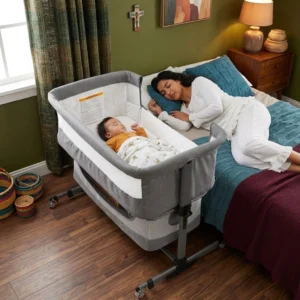
Your newborn will sleep somewhere between 14 and 17 hours a day in the early weeks. That makes their sleep space one of the most consequential purchases on this entire list — and one that a lot of parents rush through.
The American Academy of Pediatrics recommends that babies sleep on a firm, flat surface on their backs, in their own sleep space, in the same room as parents for at least the first six months. A bassinet fits that recommendation perfectly — it’s compact enough to sit right next to your bed, making nighttime feeds far easier than walking to another room.
Bedside bassinets sit flush against your bed and often have a drop-down side for easy access. The Halo BassiNest Swivel Sleeper is one of our most-read reviews — its 360-degree swivel is a genuine game-changer for middle-of-the-night feeds.
Rocking bassinets offer built-in soothing motion, some with automatic rocking triggered by the baby’s movement or crying. Helpful for fussy sleepers but not essential.
Portable bassinets fold flat for travel and are light enough to move from room to room during the day. Worth considering if you spend time in multiple spaces in your home or travel frequently.
The rules are simple but non-negotiable: always back to sleep, firm and flat surface, nothing else in the sleep space. No pillows, no bumpers, no heavy blankets. The CPSC has clear guidelines on what a safe infant sleep environment looks like — worth reading before you buy anything.
Not sure whether to go bassinet or crib from the start? Our bassinet vs. crib comparison breaks down exactly when each makes sense.
Browse all our tested picks on our best bassinets page.
—
Baby Carriers — Some Parents Swear By Them, and Here’s Why

Baby-wearing has been practiced across cultures for thousands of years — long before any product was sold around it. And modern carriers have made it more comfortable, safer, and more accessible than ever.
The appeal is simple: a well-fitted carrier keeps your baby calm and close while leaving both your hands completely free. For colicky babies especially, being held upright against a warm body can be enormously soothing.
Stretchy wraps are long pieces of knit fabric that you tie around your body. The learning curve is real, but once you get it, the fit is snug and customizable. Best for newborns.
Ring slings are shorter and thread through two rings for a one-shoulder carry. Fast to put on, easy to adjust, and great for quick carries and nursing.
Structured carriers have padded shoulder straps and a waist belt for ergonomic support. The most popular everyday option for most parents, and the easiest to share between two caregivers.
Backpack carriers are built for hiking with older toddlers — frame support, storage pockets, and sun shades for longer outdoor adventures.
Whatever carrier you use, follow the TICKS safety guidelines: Tight, In view at all times, Close enough to kiss, Keeping chin off chest, Supported back. These apply regardless of carrier type.
—
Feeding Gear — Whether You Breastfeed, Bottle Feed, or Both
There’s a lot of pressure around feeding choices, and there really doesn’t need to be. Fed is fed. What matters is that you have what you need for whichever route you take.
If you’re breastfeeding, a quality pump is worth getting sorted before your baby arrives. Many insurance plans in the US cover a breast pump at no cost under the ACA preventive care guidelines — call your provider before you buy anything out of pocket.
Beyond the pump, the most useful breastfeeding items tend to be a good nursing pillow, quality storage bags for freezer stash, and nipple cream for the early weeks. Not everything on a breastfeeding product list is actually necessary.
For bottle feeding, the honest truth is that different babies prefer different bottles — nipple shape, flow rate, and venting systems all vary. Buy a couple of different brands to start rather than a full set of one.
When solids start around six months (always check with your pediatrician — the AAP has updated guidelines worth reading), you’ll want a high chair with a removable tray, a few soft-tipped spoons, suction bowls, and silicone catch bibs. That’s genuinely all you need to start.
—
Diapers & Changing — You’ll Do This About 3,000 Times in Year One

The math on diapers is a little staggering when you first look at it. In the newborn stage you’re changing 8 to 12 diapers a day. Your setup needs to be fast, organized, and workable at 3 AM without turning on a light.
The disposable vs. cloth debate is real but ultimately personal. Disposable diapers are convenient and easy, and modern options have become increasingly soft and irritation-free. For newborns especially, look for fragrance-free and hypoallergenic options. Cloth diapers have improved enormously in design — modern all-in-ones are nearly as easy as disposables and significantly more economical over time if you’re willing to do the laundry.
A few things no one mentions enough:
Size up before you hit the weight limit. Leaking is almost always a sign the diaper is too small, not that you’ve applied it wrong. And stock your diaper bag with at least two more diapers than you think you need — you’ll thank yourself eventually.
For the changing station itself, you don’t need anything fancy. A waterproof mat on top of a low dresser works just as well as an expensive dedicated changing table. What matters is having wipes, a barrier cream, and a spare outfit within arm’s reach.
—
Baby Monitors — Peace of Mind Without Hovering
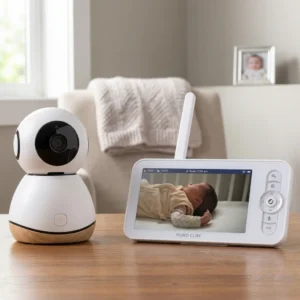
A baby monitor lets you actually put the baby down without sitting outside their door. For a lot of parents, especially in the early weeks, that’s not a small thing.
Audio monitors are simple, affordable, and reliable. If you have a small home or an open floor plan, they’re often all you need.
Video monitors let you check without going in — essential for not waking a baby who just fell asleep after 40 minutes of rocking. Look for night vision as a baseline, and two-way audio is genuinely useful for soothing from another room.
WiFi smart monitors connect to your phone and let you check from anywhere. Useful but dependent on your internet connection staying stable.
Wearable movement monitors clip to a diaper or wrap around an ankle and alert you if no movement is detected. Worth noting that the AAP does not recommend these as a substitute for safe sleep practices — they can give false reassurance. Safe sleep guidelines are what actually reduce SIDS risk.
—
Home Safety — Babyproof Before They Move, Not After
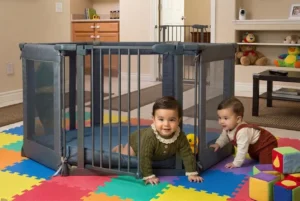
Babies go from completely immobile to pulling themselves across the floor faster than most parents expect. The window between “they can’t move” and “they can reach the outlet” is shorter than you think.
Get down on your hands and knees in every room of your home. What you see from floor level is exactly what your baby will see and try to reach.
The essentials:
- Baby gates — Hardware-mounted only at the top of stairs. Pressure-mounted gates are not safe for stair use per CPSC guidelines
- Furniture anchors — Dressers, bookshelves, and TVs must be anchored to the wall. Tip-overs are one of the leading causes of furniture-related child injuries
- Cabinet locks — Any cabinet within reach that contains cleaning products, medicines, or sharp objects
- Outlet covers — Sliding plate covers are more effective and harder for toddlers to remove than plug-in caps
- Corner guards — Coffee tables are at exactly the wrong height for learning walkers
- A baby first aid kit — Rectal thermometer, saline drops, nasal aspirator, infant pain reliever appropriate for age, bandages
—
Baby Clothing — Don’t Overbuy, Just Buy Smart

Here is a truth that every experienced parent will tell you: you will spend money on newborn clothes that your baby wears once, maybe twice, before outgrowing them entirely.
Buy a handful of newborn pieces and stock up on 3-6 month and 6-12 month sizes instead. Babies grow unpredictably — some skip newborn sizing altogether.
Cotton is the best fabric choice for everyday wear. Breathable, soft, and machine washable. For anything near a diaper, snaps beat buttons every single time at 4 AM. Sleepwear should be either snug-fitting or made from flame-resistant material per CPSC sleepwear requirements.
And accept every hand-me-down offered to you. Babies wear outfits sometimes just once before outgrowing them. There is zero shame in it — it’s just practical.
—
Toys & Play — It’s Actually Their Most Important Work

Play isn’t just keeping a baby entertained. It’s how they develop motor skills, language, problem-solving, and social awareness. The right toy at the right stage makes a real difference — and it doesn’t have to be expensive.
In the first three months, babies respond best to high-contrast patterns, gentle sounds, and faces. Black and white cards, soft rattles, and a basic activity gym are genuinely all you need.
From three to six months, babies start reaching and grasping. Activity gyms with hanging toys, crinkle books, and teething toys become useful and interesting.
From six months onward, stacking cups, shape sorters, board books, and push toys start supporting the cognitive and motor development that’s happening rapidly at this stage.
A tip that sounds small but works: rotate toys. Put half away for a few weeks and bring them back out. Your baby will engage with them like they’re brand new — because to them, they kind of are.
For safety, always check that toys are age-appropriate and free of small parts that could be choking hazards. The CPSC toy safety guidelines are a good reference.
—
What’s Worth It — And What You Can Skip
The baby gear industry is worth billions of dollars and profits from parental anxiety. Not everything marketed at new parents is something you actually need. Here’s an honest breakdown:
Genuinely worth it:
- A quality, safety-certified car seat
- A safe bassinet or crib that meets current standards
- A reliable video baby monitor
- A baby carrier you’ll actually wear
- A stroller matched to your real lifestyle
- A breast pump through insurance before spending out of pocket
Often overhyped:
- Wipe warmers — babies adapt
- Dedicated baby food makers — a regular blender does the same job
- Diaper Genie — any small lidded trash can works
- Baby shoes before walking — genuinely unnecessary
- Matching nursery furniture sets — a safe crib and a dresser is all you need
—
One Last Thing
No guide covers every baby, because no two babies are the same. What works brilliantly for one family falls flat for another. Use this as a starting point, not a rulebook.
Trust what you learn from your specific baby. You’ll figure it out faster than you think.
For our latest tested reviews, browse our car seat picks, bassinet picks, and stroller picks. And if you’re still pulling together everything you need before baby arrives, our baby registry checklist is a good place to start.